Key Takeaways
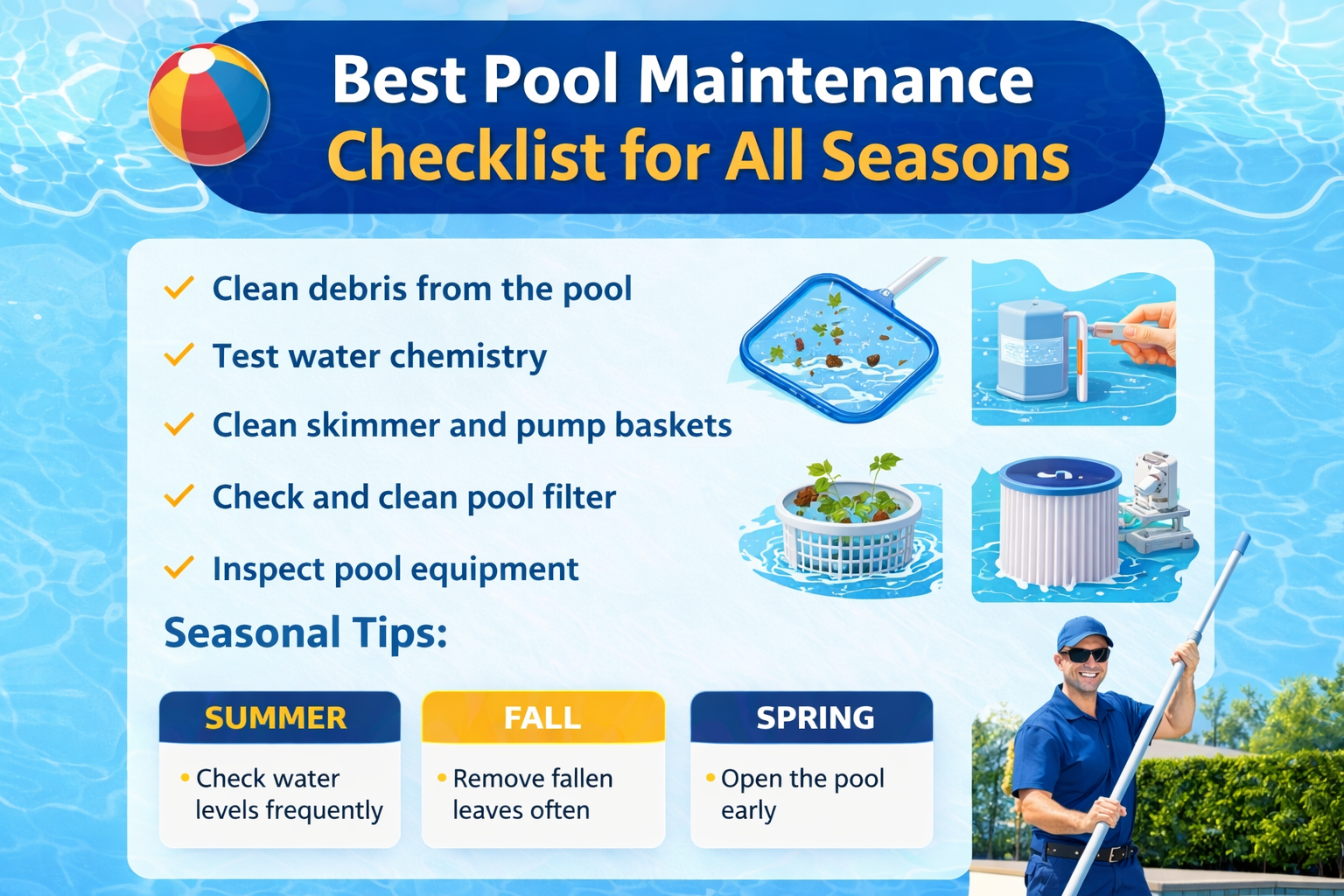
• Spring opening: Remove winter cover carefully, restore water level to halfway up skimmer, and shock treat to eliminate off-season buildup
• Summer maintenance: Test chemical levels 2-3 times weekly, maintain chlorine at 1-4 ppm, and skim debris daily during peak season
• Fall preparation: Increase debris removal frequency during leaf season to prevent staining and equipment clogs
• Winter care: Inspect and service equipment before cold weather, drain lines properly, and secure covers against contamination
• Year-round basics: Weekly brushing prevents algae growth, regular filter cleaning maintains circulation, and consistent chemical balancing protects swimmers
• Equipment checks: Inspect pumps, filters, and circulation systems seasonally for wear or damage
• Chemical priorities: Focus on pH balance (7.2-7.6), alkalinity (80-120 ppm), and proper sanitizer levels throughout all seasons
Quick Answer
A comprehensive pool maintenance checklist varies by season but centers on three core areas: water chemistry, equipment function, and debris management.
Spring requires opening procedures and shock treatment, summer demands frequent chemical testing and daily skimming, fall focuses on heavy debris removal, and winter involves proper equipment protection and winterization.
What Makes an Effective Pool Maintenance Checklist?
An effective pool maintenance checklist addresses the specific challenges each season brings to your pool’s health and safety. The best checklists break down tasks by frequency—daily, weekly, and seasonal—so you never miss critical maintenance windows.
I learned this lesson the hard way during my second year as a pool owner. I followed a generic maintenance routine year-round and ended up with a green, algae-filled mess every spring opening. Once I started adjusting my approach based on seasonal needs, pool care became much more manageable.
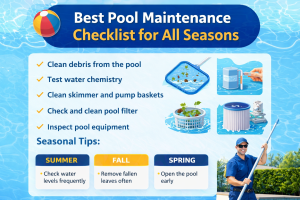
Essential checklist components include:
• Daily tasks: Skimming surface debris and checking equipment operation
• Weekly duties: Testing water chemistry, brushing walls, cleaning skimmer baskets
• Monthly activities: Deep cleaning filters, inspecting equipment, balancing total alkalinity
• Seasonal procedures: Opening, closing, and major equipment servicing
The key is consistency. Choose a schedule you can realistically maintain rather than an ambitious plan you’ll abandon after a few weeks.
Spring Pool Opening: Your Pool Maintenance Checklist Essentials
Spring opening sets the foundation for the entire swimming season. Start by removing and inspecting the winter cover, clearing any leaves, twigs, and standing water before removal to prevent contamination when opening the pool.
Critical spring opening steps:
- Remove winter plugs from skimmers and return lines—these were placed during winterization and must be removed before restarting circulation
- Restore water level to approximately halfway up the skimmer opening to enable proper pump circulation
- Inspect all equipment including pumps, filters, and circulation systems for wear or damage sustained over winter
- Clean and test water chemistry by balancing pH, alkalinity, and calcium levels after winter dormancy
- Apply shock treatment to eliminate bacteria or algae buildup accumulated during the off-season
Common mistake: Rushing the chemical balancing process. Allow 24-48 hours between major chemical adjustments to avoid overcorrection and potential equipment damage.
Summer Pool Maintenance Checklist for Peak Season
Summer maintenance focuses on managing heavy usage, intense heat, and rapid chemical depletion. Chemical level checks become critical—test levels 2-3 times per week, with particular attention to chlorine (maintain 1-4 ppm), as chlorine dissipates quickly in heat and sunlight.
Weekly summer maintenance routine:
• Daily debris skimming: Remove leaves, bugs, and floating matter daily during peak season
• Weekly brushing: Brush walls and steps at least once weekly to prevent algae growth in warm, humid conditions
• Weekly filter cleaning and vacuuming: Clean strainer baskets weekly and vacuum the pool floor regularly[3]
• Backwashing: Run filters at optimal capacity and backwash as required
Pro tip: Schedule chemical testing for the same days each week (like Monday, Wednesday, Friday) to establish a routine. This prevents the “when did I last test?” confusion that leads to chemical imbalances.
During peak summer, I test my pool every other day. It seems excessive, but the cost of chemicals for daily adjustments is far less than dealing with algae blooms or having to drain and refill.
Fall Pool Maintenance Checklist Strategies
Fall brings unique challenges as trees shed leaves and temperatures begin dropping. Increase debris removal frequency—skim the pool daily or multiple times daily during leaf season, as organic material can stain surfaces and clog filters and plumbing lines.
Fall-specific maintenance priorities:
• Intensive skimming: Remove leaves immediately to prevent tannin staining
• Filter monitoring: Check and clean filters more frequently due to increased organic load
• Chemical adjustments: Maintain sanitizer levels even as usage decreases
• Equipment preparation: Begin planning for winterization procedures
Decision rule: If your pool collects more than a skimmer basket full of debris daily, consider installing a leaf net or increasing skimming to twice daily.
Winter Pool Care and Protection
Winter maintenance varies dramatically based on your climate. In freeze-prone areas, proper winterization protects expensive equipment from damage. In warmer climates, reduced maintenance schedules keep water balanced without full shutdown.
Cold climate winterization checklist:
• Drain water from all equipment and plumbing lines
• Add winterizing chemicals to prevent algae growth
• Install winter cover securely to prevent contamination
• Remove and store removable equipment in heated areas
Warm climate winter care:
• Reduce filtration and chemical schedules but maintain basic levels
• Continue weekly skimming and monthly brushing
• Monitor equipment operation in reduced-use periods
Essential Weekly Pool Maintenance Checklist Tasks
Regardless of season, certain weekly tasks form the backbone of effective pool care. These consistent activities prevent small issues from becoming expensive problems.
| Task | Frequency | Purpose |
|---|---|---|
| Test water chemistry | 2-3 times weekly | Maintain safe swimming conditions |
| Skim surface debris | Daily | Prevent filter clogs and staining |
| Empty skimmer baskets | Weekly | Maintain proper water circulation |
| Brush walls and steps | Weekly | Prevent algae attachment |
| Vacuum pool floor | Weekly | Remove settled debris |
| Clean pool filter | Monthly | Ensure optimal filtration |
Time-saving tip: Combine tasks logically. Test water chemistry while the automatic cleaner runs, or skim the surface while waiting for chemical test results.
Common Pool Maintenance Checklist Mistakes to Avoid
Even experienced pool owners make maintenance mistakes that create bigger problems. Here are the most costly errors I’ve observed and experienced:
Chemical balancing errors:
• Adding multiple chemicals simultaneously without waiting for results
• Ignoring total alkalinity while focusing only on pH and chlorine
• Using expired test strips or reagents for water testing
Equipment neglect:
• Running pumps and filters beyond recommended service intervals
• Ignoring unusual noises or performance changes
• Skipping seasonal equipment inspections
Seasonal transition mistakes:
• Opening pools too early before consistent warm weather
• Delaying fall cleanup until after heavy leaf drop
• Rushing winterization procedures due to unexpected cold snaps
Recovery strategy: If you’ve fallen behind on maintenance, resist the urge to overcorrect with excessive chemicals. Return to proper levels gradually over several days while maintaining extra vigilance on testing.
FAQ
How often should I test my pool water?
Test pool water 2-3 times per week during swimming season, focusing on chlorine levels (1-4 ppm), pH (7.2-7.6), and total alkalinity (80-120 ppm). Reduce to weekly testing during winter months in warm climates.
What’s the most important pool maintenance task?
Consistent water chemistry testing and balancing prevents most pool problems. Proper chemical levels protect both swimmers and equipment from damage.
Can I skip weekly brushing if I have an automatic cleaner?
No, automatic cleaners don’t replace manual brushing. Brushing removes algae spores and biofilm that cleaners can’t eliminate, especially in corners and steps.
When should I shock my pool?
Shock treat weekly during heavy use periods, after heavy rain, when chlorine smell is strong, or when combined chlorine levels exceed 0.5 ppm.
How do I know when to clean my pool filter?
Clean cartridge filters every 2-4 weeks or when pressure gauge reads 8-10 psi above the clean starting pressure. Replace cartridges every 3-4 months.
What’s the biggest mistake new pool owners make?
New owners often focus only on chlorine levels while ignoring pH and alkalinity. All three must be balanced for effective sanitization and swimmer comfort.
Should I run my pool pump 24/7?
Run pumps 8-12 hours daily during swimming season, adjusting based on bather load and weather conditions. Continuous operation wastes energy without significant benefit.
How much does seasonal pool maintenance cost?
Expect $100-300 monthly for chemicals and basic maintenance supplies, plus $200-500 for seasonal opening/closing procedures if professionally done.
Can I maintain my pool myself or do I need a service?
Most pool owners can handle routine maintenance with proper education. Consider professional service for complex equipment repairs or if you travel frequently.
What happens if I skip fall maintenance?
Skipping fall debris removal leads to staining, clogged equipment, and difficult spring openings. Organic matter decomposition also depletes sanitizer and creates algae-friendly conditions.
How do I winterize my pool equipment?
Drain all water from pumps, filters, and plumbing lines in freeze-prone areas. Add antifreeze to lines that can’t be fully drained and cover equipment to prevent weather damage.
What should I do if my pool water turns green?
Green water indicates algae growth. Brush walls thoroughly, shock treat with 2-3 times normal chlorine levels, run filtration continuously, and maintain proper chemical balance until water clears.
Conclusion
A well-structured pool maintenance checklist adapts to seasonal demands while maintaining consistent core practices year-round. Success comes from understanding that spring requires intensive opening procedures, summer demands frequent chemical monitoring, fall focuses on debris management, and winter protects your investment through proper equipment care.
Start by implementing the weekly basics—regular testing, skimming, and brushing—then layer in seasonal-specific tasks as needed. Remember that consistency beats perfection; a simple routine you follow religiously outperforms an elaborate system you abandon.
Your next steps:
- Choose testing days that fit your schedule and stick to them
- Create a seasonal calendar marking major maintenance milestones
- Stock up on essential chemicals and supplies before peak seasons
- Establish relationships with local pool professionals for equipment issues beyond your comfort level
The investment in proper maintenance pays dividends in crystal-clear water, extended equipment life, and countless hours of safe swimming enjoyment.